
All About Radius Trench Drain Systems
Trench drain systems are essential engineering solutions for effectively managing surface water runoff in various applications. Among the different types available, radius trench drain systems stand out for their ability to accommodate curved or circular configurations. This article aims to provide a detailed explanation of radius trench drain systems, including their construction using couplers and their material options. Additionally, we will explore different grate materials and their suitability for specific site applications, focusing on pools, tracks, walkways and other circular environments.
Radius Trench Drain Systems
Radius trench drain systems are designed to follow curved or circular paths, making them ideal for applications where a straight linear drain is impractical. These systems offer efficient drainage while maintaining a visually appealing and seamless appearance. The design flexibility of radius trench drain systems enables their integration into various site conditions, such as pools, tracks, and other circular structures.
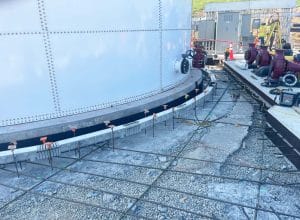
A radial trench drain system being installed at a power plant utilizing radius couplers
Construction of Radius Trench Drain Systems Using Couplers
Couplers play a vital role in achieving curved configurations in radius trench drain systems. They connect the individual sections of trench drains and allow for the creation of smooth curves or circular patterns. Couplers come in different sizes and materials to match the specific trench drain system requirements. During installation, the couplers securely join the trench drain sections while maintaining the desired radius.
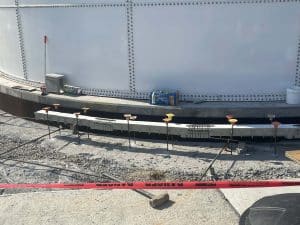
HDPE radius trench drain being installed. Couplers provide 3° of flexion.
Material Options for Radius Trench Drain Systems
Radius trench drain systems can be constructed using different materials, each offering specific advantages depending on the project requirements. The following are three common material options:
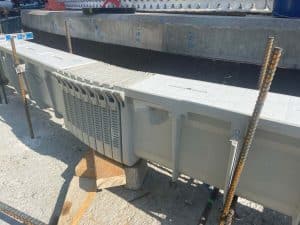
Couplers can be stacked to create sharper curves. The amount of couplers can be determined during the configuration and shop drawing phase.
a) High-Density Polyethylene (HDPE): HDPE is a lightweight and durable material commonly used in trench drain systems. It provides excellent chemical resistance, high impact strength, and UV resistance. HDPE radius trench drains are easy to install, as the lightweight material allows for quick handling and positioning. They are also cost-effective and suitable for a wide range of applications.
b) Fiber Reinforced Concrete (FRC): Fiber reinforced concrete is another popular material choice for radius trench drain systems. By adding steel or synthetic fibers to the concrete mixture, the resulting FRC offers enhanced strength, durability, and crack resistance. FRC radius trench drains are capable of withstanding heavy loads, making them suitable for high-traffic areas or locations where vehicular traffic is present.
c) Stainless Steel: Stainless steel is a premium material option for radius trench drains, particularly in applications requiring superior aesthetics, durability, and corrosion resistance. Stainless steel radius trench drains are highly resistant to chemical substances, making them suitable for industrial and commercial environments. They are also easy to clean and maintain, making them a preferred choice for applications where hygiene is essential.
IV. Grate Material Options and Site Applications: The choice of grate material for radius trench drain systems depends on the specific site conditions and application requirements. Here are three common grate material options:
a) Ductile Iron: Ductile iron grates offer exceptional strength and durability, making them suitable for heavy-duty applications. They can withstand heavy loads and provide excellent resistance to wear and impact. Ductile iron grates are commonly used in areas with vehicular traffic, such as parking lots or loading docks.
b) Polymer: Polymer grates are lightweight and corrosion-resistant, making them ideal for applications where chemical resistance and low maintenance are desired. They are suitable for pedestrian areas, patios, and landscape applications. Polymer grates are available in various colors and patterns, allowing for customization and aesthetic integration.
c) Stainless Steel: Stainless steel grates combine durability, corrosion resistance, and a sleek appearance. They are highly resistant to chemical substances and provide an aesthetically pleasing solution for various applications. Stainless steel grates are commonly used in public spaces, architectural projects, and areas requiring an upscale appearance.

A radius trench drain system is a good idea when trying to match the contour of a custom pool layout
Radius Trench Drain Systems for Pools, Tracks, and Circular Applications:
- Pools: Radius trench drain systems are widely used in pool installations. By following the contour of the pool's curved edges, these drains efficiently collect water and prevent pooling or water damage. The smooth and seamless appearance of the radius trench drains enhances the overall aesthetic appeal of the pool area.
- Tracks: In athletic tracks or sports facilities, radius trench drain systems play a crucial role in managing surface water runoff. By installing curved or circular trench drains along the track's perimeter, these systems help maintain a safe and dry surface, reducing the risk of accidents caused by water accumulation.
- Walkways- radius trench drain systems are in an ideal solution for walkway and pedestrian applications. Ranging from hotel, lobbies, to parks, to fountains and other site work applications. Adding an aesthetically pleasing touch to landscapes and walkways.
- Circular Applications: Radius trench drain systems find applications in various circular structures such as roundabouts, plazas, or courtyards. By integrating radius trench drains into these designs, surface water can be effectively managed while maintaining the aesthetic integrity of the circular space.
Versatility: A Drain For Every Layout
Radius trench drain systems provide an efficient and visually appealing solution for managing surface water runoff in applications where straight linear drains are impractical. By utilizing couplers, these systems can be easily constructed to follow curved or circular paths. The choice of materials, such as HDPE, fiber reinforced concrete, or stainless steel, allows for flexibility in meeting project requirements. Similarly, selecting the appropriate grate material, whether ductile iron, polymer, or stainless steel, ensures optimal performance based on site conditions and application needs. Whether for pools, tracks, walkways, fountains or circular environments, radius trench drain systems offer versatile and effective drainage solutions.